
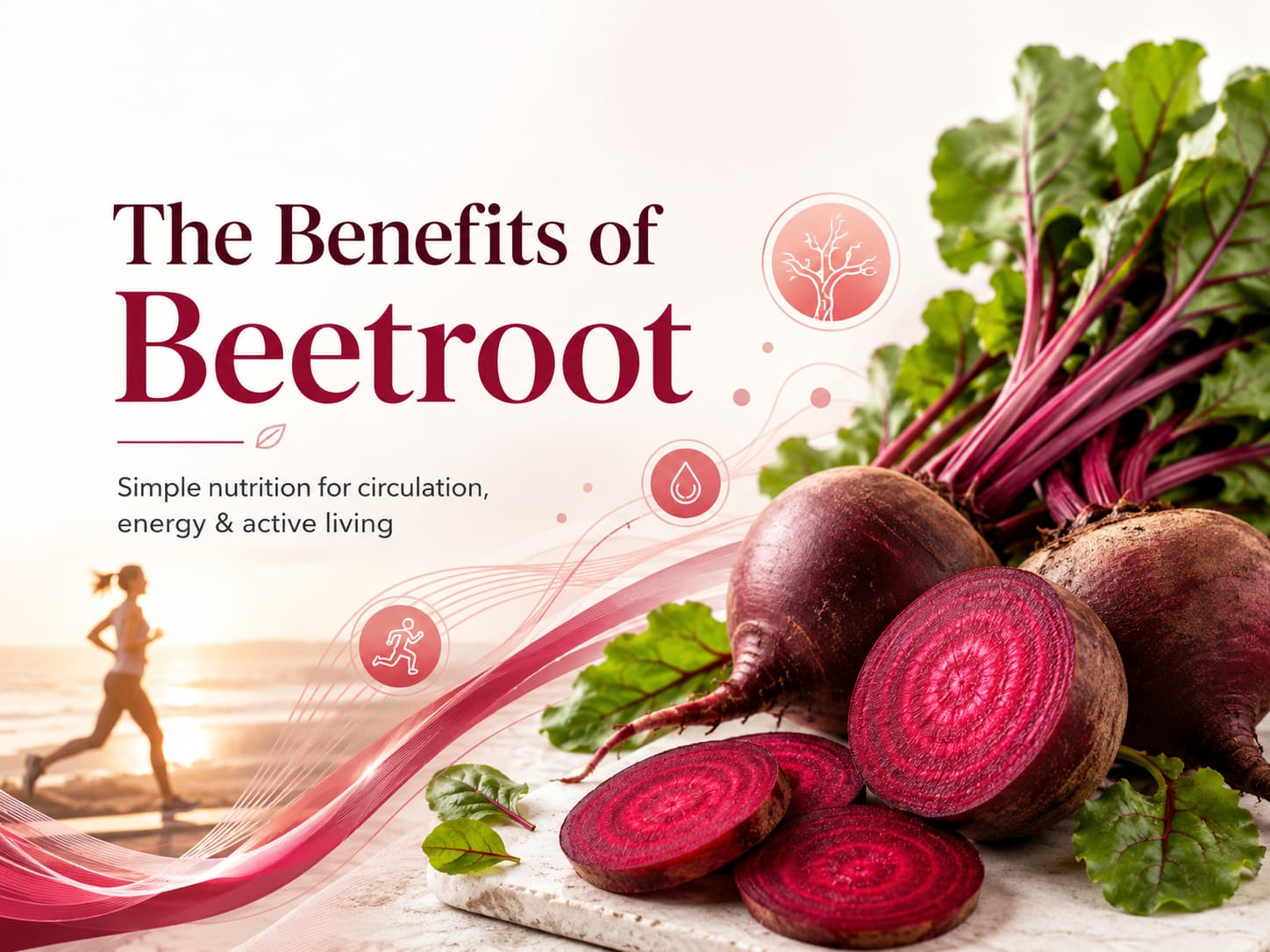
Beetroot has become a go-to choice for people looking for simple, plant-based ways to support their everyday wellness. Packed with naturally occurring dietary nitrates, antioxidants, vitamins, and minerals, this vibrant root vegetable offers a range of nutritional benefits — from nutritional support to an active lifestyle.
So what does the science actually say? Let's dig in.
1. Supports Everyday Circulation Wellness
One of the most researched benefits of beetroot comes from its naturally occurring dietary nitrates.
When you eat nitrate-rich foods like beetroot, your body converts nitrate into nitrite, and then into nitric oxide (NO). Nitric oxide plays a key role in vascular function, helping blood vessels relax and widen — which supports healthy blood flow.
Several studies have explored how beetroot-derived nitrates may influence vascular function and circulation-related markers, making it a popular focus in heart and circulation research.
The simple science: Beetroot → Dietary Nitrates → Nitric Oxide → Healthy Blood Vessel Function.
2. Supports Daily Nutrition
Healthy circulation is a cornerstone of overall cardiovascular wellness.
Studies on beetroot nitrate supplementation continue to explore its relationship with nitric oxide production and vascular function. A systematic review of randomized controlled trials found that beetroot-derived nitrate may improve certain cardiovascular risk factors — though researchers agree more high-quality studies are needed.
For everyday wellness, beetroot is an easy, tasty addition to a balanced diet rich in vegetables, fruits, whole grains, lean proteins, and healthy fats.
Important: Beetroot is a nutritional food, not a replacement for blood-pressure medication or medical treatment.
3. Supports Active Lifestyle Nutrition
Beetroot has become popular among runners, cyclists, gym-goers, and other active individuals looking to include more plant-based nutrition in their daily routines.
The reason comes back to naturally occurring dietary nitrates and nitric oxide. Beetroot-derived nitrates have been studied for their relationship with circulation and oxygen utilization during physical activity.
A 2026 systematic review and meta-analysis of 33 studies explored beetroot juice supplementation and its relationship with exercise-related outcomes, including VO₂max, high-intensity interval activity, and power output. However, results can vary depending on exercise type, supplementation approach, and individual factors.
In other words, beetroot is not a magic solution — but it can be a convenient addition to a balanced nutrition routine for active adults.
4. Provides Antioxidant Compounds
Beetroot is naturally rich in plant compounds, including betalains, the pigments responsible for its characteristic deep red-purple color.
These compounds have antioxidant properties and contribute to beetroot's nutritional profile.
Getting a variety of colorful fruits and vegetables is an easy way to increase your intake of different plant compounds. Beetroot can be one colorful option alongside foods such as berries, leafy greens, tomatoes, peppers, and carrots.
5. Supports an Active, Healthy Lifestyle
Beetroot isn't just about one specific benefit.
Its combination of dietary nitrates, plant compounds, and essential nutrients makes it an appealing food for people who want to build healthier everyday habits.
Whether you enjoy beetroot roasted, blended into a smoothie, added to a salad, or incorporated into a convenient supplement, it can fit naturally into an active and balanced lifestyle.
The key is consistency: no single food can replace a healthy diet, regular movement, adequate sleep, and other foundational wellness habits.
How Does Beetroot Work?
The most interesting part of beetroot nutrition is its nitrate-to-nitric-oxide pathway.
After consuming dietary nitrate, bacteria in the mouth help convert nitrate into nitrite. The body can then further convert nitrite into nitric oxide under certain conditions.
Nitric oxide is a signaling molecule involved in vascular relaxation and blood vessel function. That's why beetroot is often associated with circulation and exercise research.
It's also important to remember that the amount of nitrate can vary significantly depending on the type of beetroot product, serving size, preparation method, and growing conditions. Research findings from concentrated beetroot juice therefore shouldn't automatically be applied to every beetroot food or supplement.
Beetroot and Your Daily Wellness Routine
You don't need to completely change your diet to enjoy the potential benefits of beetroot. For many people, the easiest approach is simply to make beetroot part of an overall healthy routine.
Try pairing a beetroot-based product with habits such as:
- Staying physically active
- Eating a variety of colorful fruits and vegetables
- Drinking enough water
- Getting consistent sleep
- Choosing nutrient-dense foods
- Maintaining a balanced diet
Think of beetroot as one piece of the bigger wellness picture.
The Bottom Line
Beetroot is much more than a colorful root vegetable.
Its naturally occurring dietary nitrates have been extensively studied for their relationship with nitric oxide, circulation, vascular function, and physical activity. Current research suggests that beetroot may support healthy circulation and may be a valuable addition for people who maintain an active lifestyle.
At the same time, research is still evolving, and the effects can vary from person to person. Beetroot works best as part of a balanced lifestyle rather than as a substitute for medical care.
Simple food. Powerful nutrition. A colorful addition to your everyday wellness routine.
Ready to Try Beetroot?
DUO SEVEN Beet Soft Chews
If you'd rather skip the earthy taste and prep time, our Beet Soft Chews make it easy to get your daily beetroot in one tasty bite. Each chew combines beetroot nitrates with grapeseed extract, CoQ10, and B vitamins as part of a convenient daily wellness routine — and they're gluten-free, non-GMO, plant-based, and low in sugar.
Shop Beet Soft ChewsDisclaimer: This content is for informational and educational purposes only and is not intended to diagnose, treat, cure, or prevent any disease. Individual results may vary. If you have a medical condition or take medication, consult a qualified healthcare professional before making significant changes to your diet or supplement routine.