
DUO SEVEN Glow Guide
A sun-kissed look can feel fresh and confidence-boosting—but healthy-looking color should never come at the expense of healthy skin. Here is the honest science behind carotenoid-based gummies, what they can and cannot do, and how to build a safer glow routine.
First, What Does “Tanning” Actually Mean?
A conventional tan happens when ultraviolet (UV) radiation triggers the skin to produce more melanin. That color is a response to injury, not a sign that the skin has become healthier. The American Academy of Dermatology is clear that there is no safe UV tan: deliberate sunbathing and tanning beds expose skin to damage that accumulates over time.
A carotenoid-based supplement works differently. Carotenoids are naturally colored compounds found in foods such as carrots, tomatoes, watermelon and some algae. When consumed, certain carotenoids can contribute to natural pigment levels in the body and may influence the appearance of skin tone over time. That is better described as a gradual, healthy-looking glow—not a melanin tan, not an instant bronzer and not a substitute for sunscreen.
Why Do People Want a Sun-Kissed Look?
For many people, the goal is visual rather than medical: a little warmth can make the complexion appear more vibrant, complement summer clothing or reduce the urge to rely on a last-minute spray tan. The healthiest version of that goal is not “get as dark as possible.” It is to create a subtle, even-looking glow while keeping skin protection non-negotiable.
That mindset also changes the routine. Instead of chasing color with longer UV exposure, focus on consistency, hydration, gentle skin care, a balanced diet and—when more visible color is wanted—a topical self-tanner used according to its directions.

Inside the Formula: Three Carotenoids Explained
The front of the Daily Tanning Gummies package lists three carotenoids. The amounts below are label-listed amounts; confirm the serving basis on the final Supplement Facts panel before publishing or using the product.
Astaxanthin — label-listed amount: 24 mg
A red-orange carotenoid commonly sourced from microalgae. It participates in antioxidant processes. Human studies have explored oral astaxanthin in relation to skin moisture, texture and overall appearance, but it should not be presented as a sunscreen or guaranteed tanning agent.
Lycopene — label-listed amount: 50 mg
The red carotenoid found in tomatoes and watermelon. Research on tomato- and lycopene-rich diets has examined skin responses to UV-related oxidative stress. These findings do not mean lycopene prevents sunburn or replaces topical protection.
Beta-carotene — label-listed amount: 7,500 mcg
An orange provitamin A carotenoid found in carrots and sweet potatoes. The body can convert it to vitamin A, and higher carotenoid intake may influence visible skin tone characteristics in some individuals. Responses vary, and excessive intake may create an unwanted yellow-orange tone.
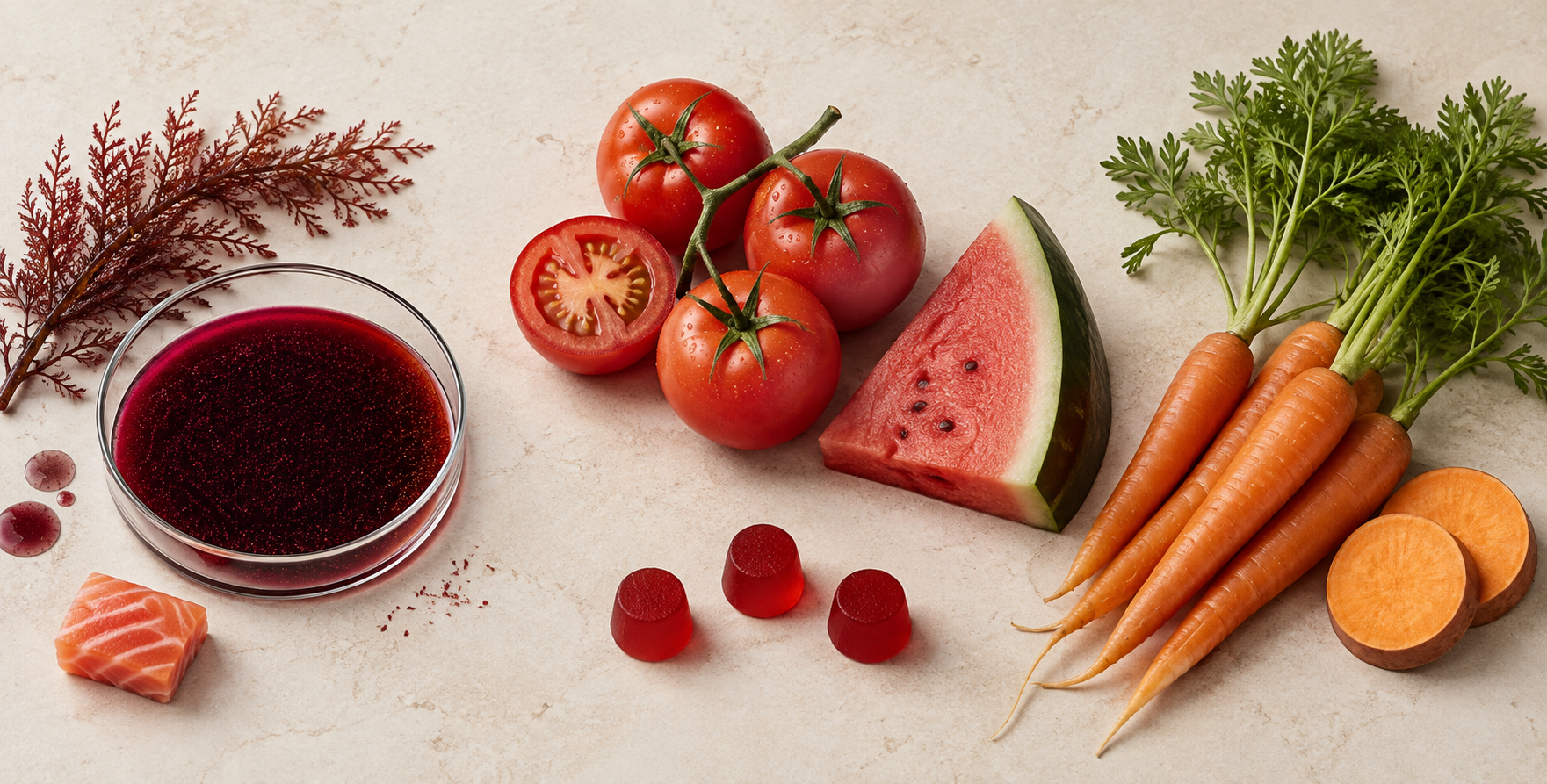 Astaxanthin, lycopene and beta-carotene belong to the carotenoid family of naturally occurring pigments.
What Can You Expect From a Carotenoid-Based Supplement?
Daily Tanning Gummies are best understood as a convenient carotenoid supplement that fits into a broader beauty-and-wellness routine. Their realistic benefits are simple:
- Three carotenoids in one format: astaxanthin, lycopene and beta-carotene are combined in an easy-to-take gummy.
- Antioxidant nutrient support: the formula provides carotenoids involved in antioxidant activity.
- A gradual beauty ritual: daily use may support a warmer, healthy-looking appearance for some people, although the degree and timing of any visible change vary.
- No messy topical step: a gummy is convenient, portable and easy to add to an established routine.
What the product cannot promise is equally important: it is not an instant tan, it does not guarantee a specific shade, and it does not protect against UVA or UVB radiation.
How to Use Daily Tanning Gummies
- Follow the product label exactly. Take only the serving stated in the Suggested Use panel. Do not infer a serving from the 60-gummy count, and do not exceed the labeled amount.
- Take the serving consistently. Carotenoid-related appearance changes, when they occur, are gradual. Avoid doubling a serving after a missed day.
- Pair it with a meal. Carotenoids are fat-soluble, and research indicates that dietary fat can improve their absorption. A normal meal containing foods such as avocado, olive oil, eggs, nuts or seeds is sufficient; more fat is not necessarily better.
- Check your full supplement routine. Avoid stacking multiple products that contain beta-carotene or vitamin A unless a qualified healthcare professional has reviewed the total intake.
- Keep SPF separate and essential. Apply broad-spectrum, water-resistant SPF 30 or higher to exposed skin and reapply about every two hours, as well as after swimming or sweating.
How to Create a More Even-Looking Glow
If you want more visible color, the most skin-conscious approach is a topical sunless self-tanner rather than deliberate UV exposure. A simple routine can produce a smoother result:
- Gently exfoliate rough areas the day before application.
- Moisturize elbows, knees, ankles and hands so dry areas do not grab excess color.
- Apply self-tanner in thin, even layers, using a mitt and following the product directions.
- Build color gradually instead of applying a heavy layer before an event.
- Continue daily SPF. A self-tan—and a carotenoid supplement—does not provide reliable sun protection.
Support the look from the basics, too: drink enough fluids, eat a varied diet rich in colorful produce, moisturize regularly and avoid tanning beds. These habits may sound less dramatic than a “tan fast” promise, but they are far kinder to your skin.
Who Should Ask a Healthcare Professional First?
Do not treat “natural” as the same thing as risk-free. Current smokers—and possibly former smokers—should avoid high-dose beta-carotene supplements unless specifically advised by a healthcare professional, because large trials have linked high supplemental beta-carotene intake with increased lung-cancer risk in smokers.
Also seek professional advice before use if you are pregnant or nursing, under 18, taking medication, managing a medical condition, preparing for surgery or already using supplements that contain vitamin A or carotenoids. Stop use and ask for advice if you develop an unexpected reaction or pronounced yellow-orange skin discoloration. Yellowing of the whites of the eyes is not a normal “glow” and requires medical evaluation.
Frequently Asked Questions
Will carotenoid gummies create a real tan?
They do not create the same melanin response as UV exposure. Carotenoids may contribute to a warmer-looking skin undertone in some people, but results vary and should not be compared with a spray tan or a UV tan.
How long until I see a difference?
There is no clinically established timeline for this exact finished formula, and an overnight change is not realistic. Consistency matters more than taking extra. Use only the labeled serving and evaluate the routine over time.
Can I skip sunscreen if I take carotenoids?
No. Oral carotenoids are not sunscreen. Use broad-spectrum, water-resistant SPF 30 or higher and follow standard sun-protection practices every day.
Can I use the gummies with a topical self-tanner?
They work through different routes, but you should still follow both labels and review your overall routine if you have sensitive skin, take medication or use other supplements. Patch-test a new topical self-tanner before full application.
Glow Smarter, One Daily Choice at a Time
A modern glow routine is not about chasing UV damage. It is about consistent care: carotenoid nutrition, realistic expectations, daily SPF and sunless color when you want it. Small daily choices can add up to a more confident, skin-conscious ritual.
Sources & Further Reading
- American Academy of Dermatology: Sunscreen FAQs
- American Academy of Dermatology: Tanning and skin-damage facts
- NIH Office of Dietary Supplements: Vitamin A and Carotenoids
- Systematic review: Astaxanthin supplementation and skin health
- Systematic review: Tomato, lycopene and skin photodamage
- Human study: Dietary fat and carotenoid absorption
- FDA: Structure/function claims for dietary supplements
Important: This article is for educational purposes only and is not medical advice. Dietary supplements are not a substitute for a varied diet, healthy lifestyle or sun protection.
FDA disclaimer: These statements have not been evaluated by the Food and Drug Administration. This product is not intended to diagnose, treat, cure or prevent any disease.